Mastering Montreal: How to Get Around Like a Local
how to get around Montreal

Mastering Montreal: How to Get Around Like a Local

Unlock Montreal's charm with this comprehensive guide to navigating its streets and attractions, making every journey effortless.

Start Your Journey

Key Takeaways

  • ✓ Montreal boasts an efficient and extensive public transit system (STM).
  • ✓ The Metro is the fastest way to traverse the city, especially downtown and to major attractions.
  • ✓ Walking and cycling are excellent options for exploring specific neighborhoods.
  • ✓ The Opus card is essential for discounted public transit fares.

How It Works

1
Arrive & Orient

Upon arrival at Montréal-Trudeau International Airport (YUL), familiarize yourself with initial transit options to your accommodation. The 747 Express Bus is usually the most straightforward and cost-effective direct route to downtown Montreal.

2
Acquire an OPUS Card

For extended stays, purchasing an OPUS card is highly recommended. This reloadable smart card offers significant savings on individual fares and allows for multi-day passes across the Metro and bus network.

3
Navigate with the Metro

Utilize Montreal's iconic Metro system for quick and easy travel between major districts and attractions. Its four lines cover most popular tourist areas, with stations often adorned with unique art and architecture.

4
Combine Modes & Explore

Integrate walking, cycling (BIXI), and occasional taxi/rideshare services for a comprehensive exploration. Many of Montreal's most charming areas are best discovered on foot or by bike, especially during warmer months.

Understanding Montreal's Public Transportation System (STM)

Empty subway platform in Montreal with unique brick wall pattern and benches. Photo: theperspectif b / Pexels
When planning how to get around Montreal, understanding its robust public transportation system, operated by the Société de transport de Montréal (STM), is paramount. The STM is a highly efficient, integrated network of metro and bus lines that covers virtually the entire island of Montreal, making it incredibly convenient for both residents and visitors alike. The crown jewel of this system is undoubtedly the Montreal Metro, a clean, quiet, and rapid underground railway. With its distinctive rubber-tired trains, the Metro offers a unique travel experience and is often the quickest way to traverse significant distances across the city, especially during peak traffic hours. The four lines – Green, Orange, Yellow, and Blue – connect major hubs, tourist attractions, and residential areas. The Orange Line, for instance, runs through the heart of downtown, connecting the Bonaventure and Berri-UQAM stations, which are key transfer points. The Green Line services many of the city's cultural institutions and entertainment venues, including the Bell Centre and Parc Jean-Drapeau (via the Yellow Line connection at Berri-UQAM). Beyond the Metro, Montreal's bus network is extensive, complementing the underground system by reaching areas not directly served by the Metro and providing crucial last-mile connections. Buses run frequently, often 24/7 on major routes, and are equipped with features like bike racks during warmer months and accessibility ramps. Navigating the bus system is straightforward with apps like Google Maps or the official Chrono app, which provide real-time tracking and route planning. For visitors, purchasing an OPUS card is highly recommended. This reloadable smart card allows you to load various fare types, including single trips, 24-hour passes, 3-day passes, and weekly passes, which offer significant savings compared to buying individual paper tickets. You can purchase an OPUS card and load fares at any Metro station, convenience stores, or pharmacies displaying the OPUS logo. Understanding the interconnectedness of the Metro and bus lines, and leveraging the OPUS card, will be your primary strategy for seamless travel in Montreal. The STM website and mobile apps are excellent resources for route planning, real-time schedules, and service updates, ensuring you're always informed about the best way to reach your destination. For more general travel insights, explore our comprehensive travel guides.

Exploring Montreal on Foot and By Bike: The Best Ways to See the City Up Close
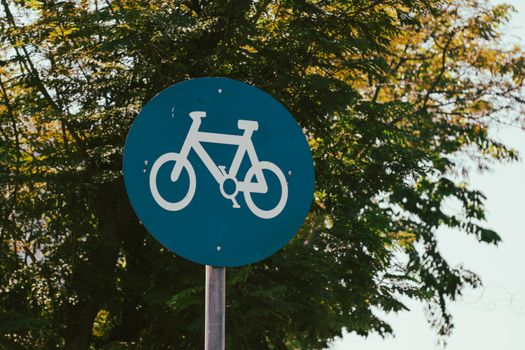
A clear bicycle lane sign against a backdrop of lush green trees, signifying a safe cycling path. Photo: indra projects / Pexels
While Montreal's public transport is excellent, some of the city's most charming facets are best discovered by slowing down and exploring on foot or by bicycle. Walking is an absolute must, especially in historic and picturesque neighborhoods like Old Montreal, the Plateau Mont-Royal, and the Latin Quarter. These areas are characterized by narrow, winding streets, stunning architecture, and vibrant atmospheres that are simply missed when whizzing by in a vehicle. Old Montreal, with its cobblestone streets, Notre-Dame Basilica, and Old Port, is a pedestrian's paradise. Allow yourself ample time to wander, stumble upon hidden courtyards, and soak in the European ambiance. The Plateau Mont-Royal, known for its distinctive spiral staircases, colorful murals, and bustling St-Denis and St-Laurent streets, is another area tailor-made for walking. You'll find countless independent boutiques, cafes, and restaurants, each contributing to the neighborhood's unique character. For those who prefer a more active mode of transport, cycling is an incredibly popular and efficient way to get around Montreal, especially during the warmer months (typically April to October). Montreal is a remarkably bike-friendly city, boasting over 700 kilometers of bike paths, including dedicated lanes and scenic routes along the Lachine Canal and the St. Lawrence River. The city's public bike-sharing system, BIXI Montreal, is a game-changer for visitors. With hundreds of stations scattered across the city, BIXI allows you to pick up a bike from one station and drop it off at another, making it perfect for one-way trips or spontaneous exploration. You can purchase single rides, 24-hour, or 72-hour passes directly at BIXI stations or through their mobile app. Helmets are not mandatory for adults in Quebec, but always recommended for safety. Beyond BIXI, numerous private bike rental shops offer a wider range of bicycles, including electric bikes, for longer excursions. Remember to always follow traffic laws, use hand signals, and be aware of pedestrians. Combining walking and cycling allows you to experience Montreal's diverse landscapes, from its bustling urban core to its tranquil green spaces, at your own pace and in a truly immersive way. This blend of mobility options is key to truly understanding how to get around Montreal and experience its unique rhythms.

Navigating Montreal from the Airport and Beyond: Taxis, Rideshares, and Commuter Trains
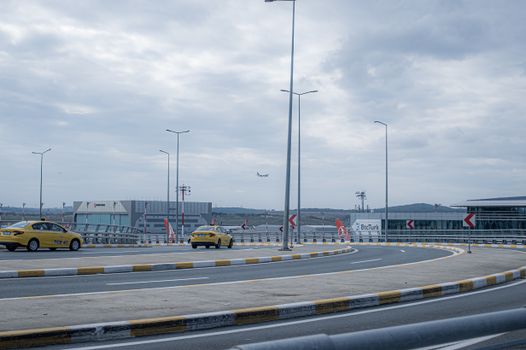
A busy airport scene showing taxi cabs, runway, and an airplane taking off under a cloudy sky. Photo: Oleksiy Yeshtokyn,🌻🇺🇦🌻 / Pexels
Getting to and from Montréal-Pierre Elliott Trudeau International Airport (YUL) is often the first logistical challenge visitors face when figuring out how to get around Montreal. Thankfully, there are several reliable options. The most popular and cost-effective choice for many is the 747 Express Bus. This 24/7 service connects the airport directly to several key Metro stations downtown, including Lionel-Groulx and Berri-UQAM, which are major transfer hubs. A single fare on the 747 bus costs the same as a 24-hour STM pass, meaning you can use the same ticket to continue your journey on the Metro or other bus lines for the remainder of that 24-hour period – an excellent value. Tickets can be purchased directly on the bus (exact change in Canadian dollars, no bills over $20), at vending machines in the airport, or by using an OPUS card. For those seeking more direct or private transportation, taxis and rideshare services (Uber, Lyft) are readily available at the airport. Taxi fares from YUL to downtown Montreal are fixed, typically around $45-$50 (plus tip), providing predictability. Rideshare services offer competitive pricing, often slightly less than taxis, and can be easily booked via their respective apps. Ensure you only use official airport taxis from the designated ranks or legitimate rideshare pickups to avoid scams. Beyond the airport, while the STM covers most of the island, for venturing into the greater Montreal metropolitan area or specific suburban locations, commuter trains (operated by exo) become relevant. These trains connect Montreal to surrounding towns and regions, offering a convenient way to explore beyond the immediate city limits. The main commuter train stations in Montreal are Central Station (Gare Centrale) and Lucien L'Allier. Fares for commuter trains are zone-based and can also be loaded onto an OPUS card, though a specific fare product for the exo network might be required depending on your destination. Planning trips with exo can be done via their website or the Chrono app. While perhaps not essential for a typical tourist focusing solely on downtown Montreal, understanding these options provides a complete picture of how to get around Montreal and its broader region, offering flexibility for day trips or specific attractions outside the urban core. For seamless planning, always refer to official STM and exo resources, or use robust navigation apps. For more detailed insights into Canadian travel, check out our expert travel articles.

Essential Tips and Common Mistakes to Avoid When Navigating Montreal
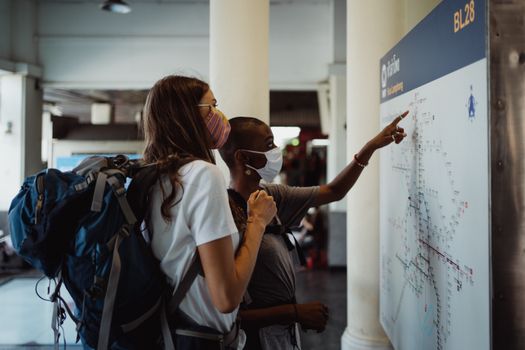
Two masked travelers checking a subway map to find their direction indoors. Photo: Ketut Subiyanto / Pexels
Navigating a new city can be daunting, but with a few insider tips and an awareness of common pitfalls, you can master how to get around Montreal like a seasoned local. Here's what you need to know: * **Always Buy an OPUS Card for Extended Stays:** While single paper tickets are available, they are more expensive and less convenient. An OPUS card, even for a 3-day pass, will save you money and hassle. You can purchase and reload them at any Metro station or dépanneur (convenience store). * **Understand Metro Transfers:** Within the Metro system, once you enter a station, you can transfer between lines without exiting and re-paying. This makes complex journeys surprisingly simple. However, if you exit a station, even if you re-enter minutes later, you'll need a new fare. * **Utilize Navigation Apps:** Google Maps, Apple Maps, and the official Chrono app are invaluable. They provide real-time bus and Metro schedules, route planning, and even BIXI station availability. Don't rely solely on paper maps. * **Be Mindful of Rush Hour:** Like any major city, Montreal experiences rush hour. The Metro can get very crowded, especially on the Orange and Green lines, between 7:30 AM-9:00 AM and 4:30 PM-6:00 PM on weekdays. If possible, plan your travel to avoid these times for a more comfortable experience. * **Dress for the Weather (Especially Winter):** Montreal's winters are legendary. If visiting during colder months, public transport is a lifesaver, but be prepared for short walks to and from stations. Summers can be hot and humid, making BIXI and walking pleasant, but stay hydrated. * **Don't Underestimate Walking Distances:** While many areas are walkable, Montreal is a large city. What looks close on a map might be a 30-minute walk. Combine walking with public transport to cover more ground without exhaustion. * **Validate Your Fares:** When using the Metro, your OPUS card is scanned at the turnstile. On buses, tap your card or insert your paper ticket into the validator near the driver. Failure to validate can result in fines during random checks. * **Learn a Few French Phrases:** While Montreal is bilingual, knowing basic French phrases like 'Bonjour' (hello), 'Merci' (thank you), and 'Où est...?' (Where is...?) can enhance your experience and endear you to locals, especially when asking for directions.

Comparison

FeatureMetro & Bus (STM)BIXI (Bike Share)Taxi/RideshareWalking
Cost (per trip)$3.75 (single fare)$3.50 (single BIXI trip)$15-$50+Free
SpeedFast (Metro), Moderate (Bus)ModerateFastest (door-to-door)Slowest
ConvenienceHigh (extensive network)High (many stations)High (on-demand)High (for short distances)
CoverageExcellent (city-wide)Good (central areas)Excellent (door-to-door)Limited (neighborhoods)
Weather DependentNo (Metro), Yes (Bus delays)Yes (seasonal/rain)NoYes (extreme weather)
AccessibilityGood (Metro stations vary)Limited (some bikes for all)GoodVaries (cobblestones)

What Readers Say

"The Montreal Metro is an absolute dream! We bought 3-day passes on our OPUS cards and zipped everywhere, from Old Montreal to the Plateau. It made how to get around Montreal so incredibly easy and stress-free."

Sarah L. · Toronto, ON

"As an avid cyclist, the BIXI system was fantastic for exploring the city. I loved being able to pick up a bike near my hotel and drop it off after visiting a museum. It's a brilliant way to experience Montreal."

David M. · New York, NY

"We used the 747 bus from the airport, and it was so efficient. The fact that the fare included a 24-hour pass was a huge bonus and helped us start exploring immediately without extra cost. Highly recommend for getting into the city."

Maria G. · Boston, MA

"Public transit was mostly excellent, though buses could be a bit slow during rush hour. Still, with the Metro, we rarely needed a taxi. Just plan around peak times, and you'll be fine."

Tom K. · Vancouver, BC

"Walking through Old Montreal and the Plateau was my favorite part of the trip. The city is so pedestrian-friendly in those areas, and you discover so much more on foot. Combine it with the Metro for longer distances!"

Jessica P. · London, UK

Frequently Asked Questions

What is the best way to get around Montreal for tourists?

For most tourists, a combination of the Metro and walking is the most efficient and enjoyable way to explore Montreal. The Metro is fast and connects major attractions, while walking allows you to soak in the atmosphere of charming neighborhoods. Consider a multi-day OPUS card for best value.

Is Montreal public transportation safe?

Yes, Montreal's public transportation, especially the Metro, is generally very safe. Stations are well-lit, and trains are frequently patrolled. As with any major city, it's always wise to be aware of your surroundings, especially late at night, but serious incidents are rare.

How do I buy a Metro ticket in Montreal?

You can buy Metro tickets or load fares onto an OPUS card at automated vending machines located in every Metro station. These machines accept cash, credit cards, and debit cards. You can also purchase them at convenience stores and pharmacies displaying the OPUS logo.

How much does it cost to get around Montreal?

A single Metro or bus fare costs $3.75. However, multi-day passes (24-hour: $11, 3-day: $21.25, weekend: $15.25) offer much better value for tourists planning to use public transport frequently. A weekly pass costs $29.

Is it better to use Uber or taxis in Montreal?

Both Uber/Lyft and taxis are readily available and reliable in Montreal. Taxis have fixed rates from the airport, while rideshares can sometimes be slightly cheaper or offer surge pricing. The choice often comes down to personal preference for app-based booking versus hailing a cab.

Who should use BIXI bikes in Montreal?

BIXI bikes are ideal for active individuals visiting Montreal during warmer months (April to November) who want to explore specific neighborhoods or cover moderate distances between Metro stations. It's perfect for short, spontaneous rides and offers a unique perspective of the city.

Are Montreal Metro stations accessible?

While the STM is working to improve accessibility, not all Metro stations are fully accessible. Currently, about 25% of stations have elevators. It's best to check the STM website or app for an up-to-date list of accessible stations if you require elevator access.

Will Montreal get a new express train to the airport?

Yes, the Réseau express métropolitain (REM) is a new automated light rail network that is progressively rolling out. A direct connection from downtown Montreal to the airport is under construction and is expected to significantly enhance airport accessibility upon its full completion in the coming years.

Armed with this comprehensive guide, you now possess all the knowledge on how to get around Montreal with confidence and ease. From its efficient Metro to charming BIXI rides, your Montreal adventure awaits seamless navigation. Plan your routes, embrace the local rhythm, and prepare to fall in love with every corner of this magnificent city.

Topics: how to get around MontrealMontreal public transportMontreal metrotraveling in MontrealMontreal transportation tips
Leo List

DK Escorts LU Escorts AT Escorts SE Escorts FI Escorts CH Escorts DE Escorts HR Escorts IE Escorts GR Escorts CZ Escorts NO Escorts BE Escorts FR Escorts SI Escorts IL Escorts NL Escorts PL Escorts HU Escorts ES Escorts IT Escorts PT Escorts SK Escorts RO Escorts ZA Escorts UY Escorts US Escorts UK Escorts NZ Escorts AU Escorts
Brampton weed
Adultwork EstrelaBet Vai de Bet R7 Bet Betão Galera Bet Rainbet Bet9ja Shop SportyBet BetKing Sisal Loto Foot Hollywoodbets YesPlay Odibets RushBet Jugabet BetWarrior BetCity MSport betPawa Fortebet