Seamless Connectivity: How to Buy Canada Travel SIM Card
August 16, 2026 17 min read 3,474 words
Unlock instant connectivity in Canada with the perfect travel SIM, ensuring you're always in touch.
Find Your SIM Now
Understanding Your Options: Physical SIM vs. eSIM for Canada Travel
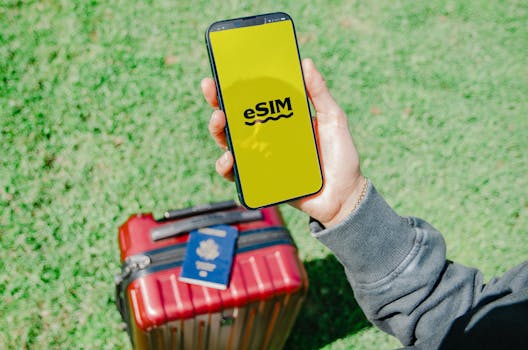 Photo: Jacob / Pexels
When planning your Canadian adventure, securing reliable mobile connectivity is paramount. The decision to buy a Canada travel SIM card often boils down to two primary choices: a traditional physical SIM card or the newer, more convenient eSIM. Each option presents its own set of advantages and considerations, and understanding these differences is the first step towards making an informed decision that best suits your travel style and device capabilities.
Physical SIM cards have been the standard for decades. These small plastic chips are inserted into your phone's SIM card slot, providing access to a local mobile network. Their main advantage lies in their universal compatibility with virtually any unlocked GSM phone. You can purchase them before you leave home from international SIM card providers, or more commonly, upon arrival in Canada at airports, mobile carrier stores, or even convenience stores. The process usually involves selecting a prepaid plan, registering your details (sometimes requiring ID), and then activating the card. While straightforward, this method does involve physically handling a small component and potentially waiting in line, which might not be ideal after a long flight. Additionally, if your phone has only one SIM slot and you want to keep your home number active for certain services, a physical SIM might not be the most flexible choice.
On the other hand, eSIMs (embedded SIMs) represent a significant leap in mobile technology. An eSIM is a digital SIM profile that's built directly into your device, eliminating the need for a physical card. This means you can activate a local Canadian plan without ever needing to open your SIM tray. The benefits of eSIMs for travelers are numerous. Firstly, convenience is key. You can purchase and activate an eSIM plan entirely online, often within minutes, before you even depart for Canada. This means you land with immediate connectivity, avoiding the hunt for a store or the hassle of swapping cards. Secondly, many modern smartphones support both a physical SIM and an eSIM simultaneously, allowing you to keep your home number active for calls or texts while using a Canadian eSIM for data. This 'dual SIM' functionality is incredibly useful for managing personal and travel communications. However, eSIMs are not universally supported; they require a compatible device, typically newer smartphone models. Before you commit to an eSIM, it's crucial to verify that your phone supports this technology. Major Canadian carriers like Rogers, Bell, and Telus, along with various third-party eSIM providers, offer competitive eSIM plans specifically tailored for tourists. Understanding these nuances will help you
choose the best connectivity option for your trip, ensuring you stay connected throughout your Canadian journey. This foundational decision sets the stage for a smooth, connected experience from the moment you arrive.
When evaluating providers, consider not just the cost but also the network coverage, especially if your travel plans extend beyond major urban centers to more remote areas. Some providers excel in urban connectivity, while others offer broader coverage across rural regions. Reading recent reviews and checking coverage maps can provide valuable insights. The choice between a physical SIM and an eSIM largely depends on your device, your comfort with technology, and your desire for immediate connectivity versus the traditional approach. Both options offer robust solutions for staying connected in Canada, empowering you to navigate, communicate, and share your experiences effortlessly. The next sections will delve deeper into specific providers and plans, guiding you towards the perfect Canadian travel SIM solution.
Navigating Canadian Mobile Providers: Best Prepaid Plans for Tourists
 Photo: alex ohan / Pexels
Once you've decided between a physical SIM and an eSIM, the next crucial step is to navigate the landscape of Canadian mobile providers to find the best prepaid plan for your travel needs. Canada's telecommunications market is primarily dominated by three major players, often referred to as the 'Big Three': Rogers, Bell, and Telus. These carriers own and operate the most extensive and reliable networks across the country, offering a wide range of services including 4G LTE and increasingly 5G connectivity. In addition to these giants, several Mobile Virtual Network Operators (MVNOs) operate on the Big Three's infrastructure, often providing more budget-friendly options with slightly different feature sets.
**Rogers, Bell, and Telus:** These three carriers offer the most comprehensive coverage, especially in remote or less populated areas. If your itinerary includes exploring national parks, venturing into the wilderness, or traveling extensively across different provinces, opting for one of these major providers might be your safest bet for consistent signal. They all offer various prepaid plans, typically including a set amount of data, unlimited national talk, and unlimited international text. Their plans tend to be slightly more expensive than MVNOs, but the premium often comes with superior network performance and customer support. When looking at their prepaid options, pay close attention to data allowances, as this is usually the primary driver of cost for tourists. Some plans may offer data rollover or throttled data after reaching your cap, which can be useful.
**MVNOs and Budget-Friendly Alternatives:** Operating on the networks of the Big Three, MVNOs offer compelling alternatives, often at a lower price point. Key MVNOs include Fido (owned by Rogers), Virgin Plus (owned by Bell), Koodo Mobile (owned by Telus), and Freedom Mobile (an independent carrier with its own network in major urban centers, and roaming agreements elsewhere).
* **Fido, Virgin Plus, and Koodo** are excellent choices for travelers who primarily stick to urban and suburban areas. They leverage the robust networks of their parent companies, meaning reliable service in most populated regions. Their prepaid plans are often more flexible and can be a good value for data-heavy users. They frequently run promotions, so it's worth checking their websites close to your travel dates.
* **Freedom Mobile** is unique as it operates its own network, primarily in major cities like Vancouver, Calgary, Edmonton, Toronto, and Montreal. If your travel is confined to these metropolitan areas, Freedom Mobile can offer very competitive plans with generous data allowances. However, once you leave their native network, you'll roam on partner networks (like Rogers or Bell), which might incur additional costs or have data limitations. It's crucial to understand their coverage map if considering Freedom Mobile.
When comparing plans, always look at the total cost, not just the monthly fee. Consider activation fees, taxes, and any potential add-ons you might need. Also, check the validity period of the plan – most prepaid plans are valid for 30 days, which aligns well with typical tourist stays. Ensure the plan includes sufficient data for your needs (navigation, social media, messaging, etc.) and unlimited national talk if you anticipate making many local calls. Some plans also include international calling minutes, which could be a bonus. Remember that your device must be unlocked to use a Canadian physical SIM card. For eSIMs, compatibility is key. By carefully evaluating these options, you can confidently buy a Canada travel SIM card that perfectly matches your budget and connectivity expectations, ensuring a worry-free communication experience throughout your Canadian adventure.
Where to Buy Your Canada Travel SIM Card: Online, Airport, or Retail?
 Photo: Oleksiy Yeshtokyn,🌻🇺🇦🌻 / Pexels
Deciding where and when to buy your Canada travel SIM card is just as important as choosing the right plan. You have several convenient options, each with its own benefits and drawbacks. Your choice will likely depend on your preference for pre-planning, your arrival logistics, and your comfort with immediate setup versus waiting until you're settled. Understanding these purchasing avenues will help you streamline your arrival and ensure you're connected from the moment you step off the plane.
**1. Purchasing Online Before You Travel:** This is increasingly becoming the most popular option, especially with the rise of eSIMs. Buying online offers unparalleled convenience and peace of mind. Many third-party providers specialize in international travel SIMs and eSIMs, allowing you to select a plan, pay for it, and have it ready for activation before you even leave home. For eSIMs, this means you can land in Canada with instant connectivity by simply scanning a QR code or following a few digital steps. For physical SIMs purchased online, they will typically be mailed to your home address, allowing you to insert the card upon arrival. The primary advantage here is avoiding airport queues and the potential for limited choices or higher prices at your destination. It also means you can immediately access maps, ride-sharing apps, and contact loved ones without relying on public Wi-Fi. Reputable online platforms include Airalo, Holafly, and Nomad for eSIMs, and dedicated international SIM card retailers for physical cards. Always check reviews and ensure the provider offers good coverage in Canada. This method is ideal for those who prefer to have all their travel arrangements sorted in advance, minimizing stress upon arrival. You can compare plans and prices at your leisure, ensuring you get the best deal.
Pre-ordering your SIM can save you valuable time and hassle, allowing you to start your Canadian adventure without delay.
**2. Buying at the Airport Upon Arrival:** Most major Canadian international airports (e.g., Toronto Pearson, Vancouver International, Montreal-Trudeau) have kiosks or stores where you can purchase a SIM card. You'll typically find outlets for the Big Three carriers (Rogers, Bell, Telus) or their sub-brands. This option offers immediate gratification – you can get connected as soon as you clear customs. However, there are a few considerations. Airport prices can sometimes be slightly higher than in city stores, and the range of plans might be more limited. You might also encounter queues, especially during peak travel times. Additionally, staff might be busy, and the activation process could take a little longer. While convenient for immediate connectivity, it's worth weighing the potential for higher costs and wait times against the benefits of instant access.
**3. Purchasing at Retail Stores in the City:** Once you've settled into your accommodation, you can visit official carrier stores (Rogers, Bell, Telus, Fido, Virgin Mobile, Koodo, Freedom Mobile) or electronics retailers (e.g., Best Buy, Walmart, London Drugs) in any Canadian city or town. This option often provides the widest selection of prepaid plans and the benefit of dedicated customer service to help with activation and any questions. Prices are generally more competitive than at airports. The drawback is that you'll be without local connectivity until you make your way to a store, which might require relying on Wi-Fi or international roaming in the interim. This method is best for travelers who don't need immediate connectivity upon landing and prefer to take their time comparing options in a relaxed environment. You'll also have the advantage of speaking directly with a sales representative who can explain the nuances of different plans and help you choose the best fit for your specific needs. Regardless of where you choose to buy, remember to bring your passport or a valid photo ID, as Canadian regulations often require identification for SIM card activation.
Essential Tips & Common Mistakes When Buying a Canadian SIM Card
 Photo: Monstera Production / Pexels
To ensure a smooth and connected experience during your Canadian travels, it's crucial to be aware of some essential tips and common pitfalls when you buy a Canada travel SIM card. Avoiding these mistakes can save you time, money, and frustration, allowing you to fully enjoy your trip without connectivity worries.
**Essential Tips for a Seamless Experience:**
* **Unlock Your Phone:** This is perhaps the most critical tip for physical SIM cards. Ensure your smartphone is unlocked before you arrive in Canada. A locked phone will only work with SIM cards from your home carrier, rendering any Canadian SIM useless. Contact your home service provider to confirm your phone's status and request an unlock if necessary. For eSIMs, this is generally less of an issue, but device compatibility is still key.
* **Verify eSIM Compatibility:** If you're opting for an eSIM, double-check that your device supports this technology. Most newer iPhone models (XS and later), Google Pixel phones (3 and later), and select Samsung Galaxy phones are compatible. A quick online search for your specific phone model will confirm its eSIM capabilities.
* **Understand Data Usage:** Canada's vast landscapes and attractions mean you'll likely rely on navigation, translation apps, and social media. Estimate your data needs realistically. Streaming videos or frequent video calls consume a lot of data. Most prepaid plans offer data bundles, and exceeding them can lead to costly overage charges or throttled speeds.
* **Check Coverage Maps:** If your travel involves remote areas, national parks, or less populated regions, review the coverage maps of your chosen provider. The 'Big Three' (Rogers, Bell, Telus) generally offer the best rural coverage. Don't assume good coverage everywhere, especially in a country as large as Canada.
* **Keep Your Home SIM Safe:** If using a physical Canadian SIM, safely store your home SIM card. A small SIM card holder or a dedicated slot in your wallet can prevent it from getting lost, ensuring you can easily switch back upon returning home.
* **Bring ID for Activation:** Canadian carriers often require government-issued photo identification (like your passport) to activate a prepaid SIM card. Have it readily available when purchasing in person.
**Common Mistakes to Avoid:**
* **Buying Without Research:** Don't just pick the first SIM card you see. A few minutes of online research before your trip can save you money and ensure you get a plan that truly fits your needs. Compare data allowances, validity periods, and prices.
* **Ignoring Activation Procedures:** Each SIM or eSIM will have specific activation steps. Read the instructions carefully. For eSIMs, make sure you have a stable internet connection (e.g., airport Wi-Fi) to download the profile.
* **Underestimating Data Needs:** Running out of data mid-trip can be frustrating and expensive if you need to purchase top-ups or expensive roaming. It's often better to slightly overestimate than underestimate.
* **Forgetting About International Calls:** Most standard prepaid Canadian SIMs include unlimited national talk and international text. If you plan to make international calls, ensure your chosen plan includes international minutes or consider using VoIP apps like WhatsApp or Messenger over data.
* **Disregarding Plan Expiry:** Prepaid plans have a validity period (e.g., 30 days). If your trip is longer, you'll need to top up or purchase a new plan. Keep track of your plan's expiry date to avoid sudden loss of service.
* **Assuming Free Public Wi-Fi is Everywhere:** While many cafes, hotels, and public spaces offer Wi-Fi, it's not always reliable, secure, or readily available when you need it most (e.g., for navigation in an unfamiliar area). A personal SIM card ensures consistent connectivity.
By keeping these tips in mind and actively avoiding common mistakes, you'll be well-prepared to buy a Canada travel SIM card that enhances your journey, keeping you connected and making your Canadian adventure even more enjoyable.
